
What Is a Paper Business Card?
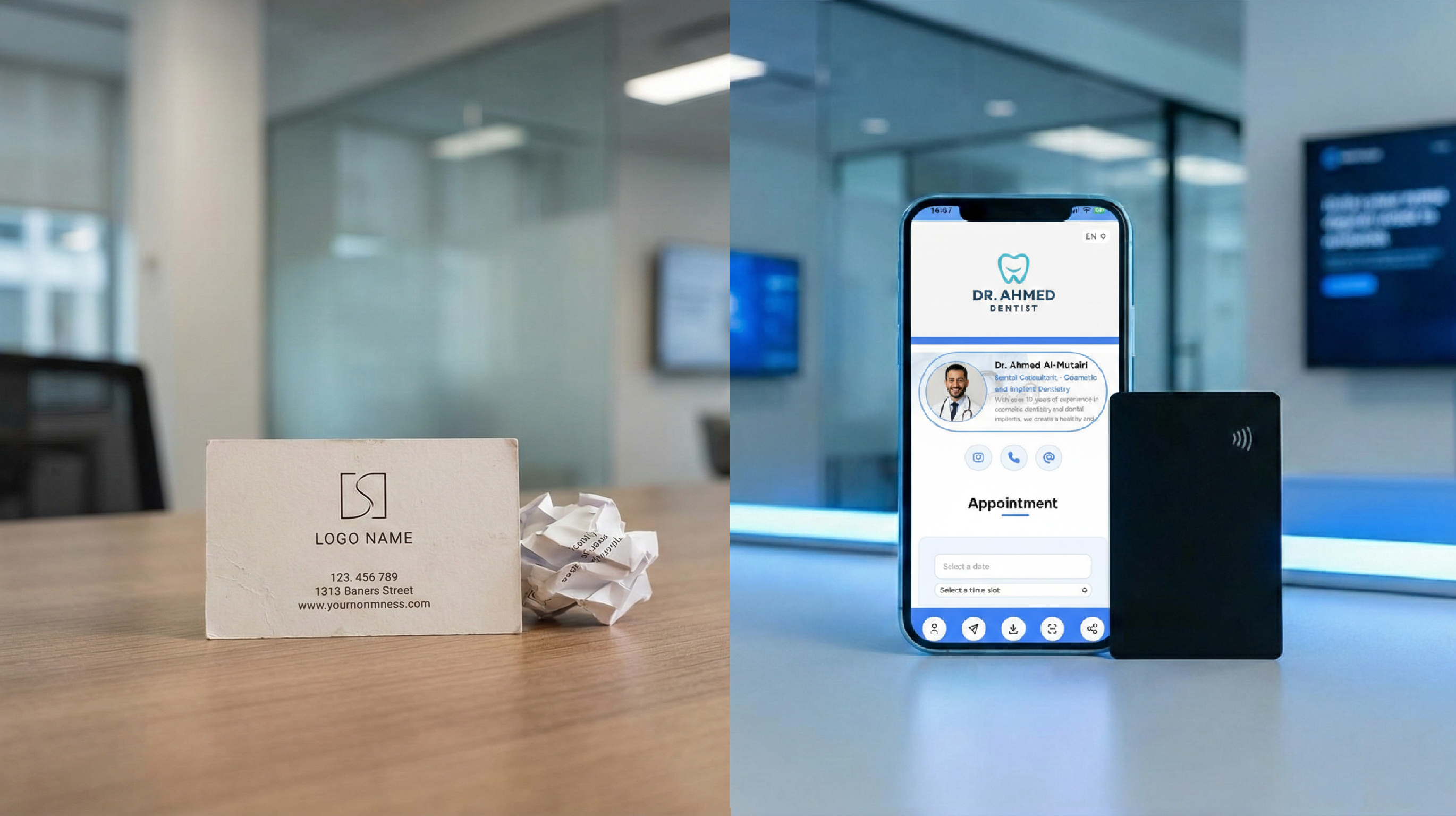
A paper business card is a printed physical card that includes basic contact details such as:
-
Name
-
Job title
-
Company name
-
Phone number
-
Email
-
Website
They are typically exchanged in person during meetings, conferences, and networking events.
Paper cards have traditionally symbolized professionalism and legitimacy.
However, their limitations have become more visible in a digital-first world.
What Is a Digital Business Card?
A digital business card is an online profile that contains your contact details, social links, services, booking options, and products, accessible via:
-
Smart link
-
QR code
-
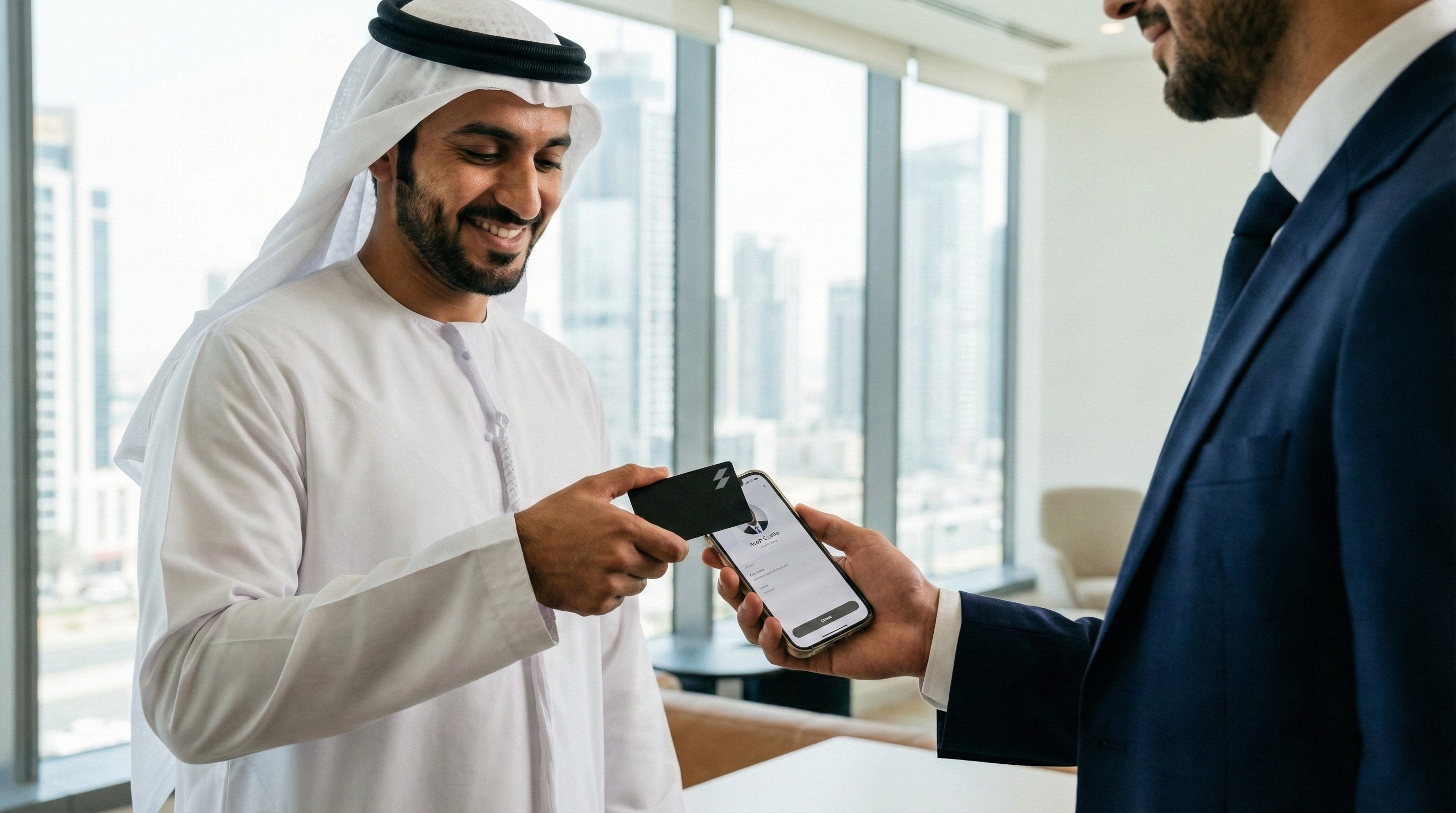
NFC tap
-
Email signature
-
Messaging apps
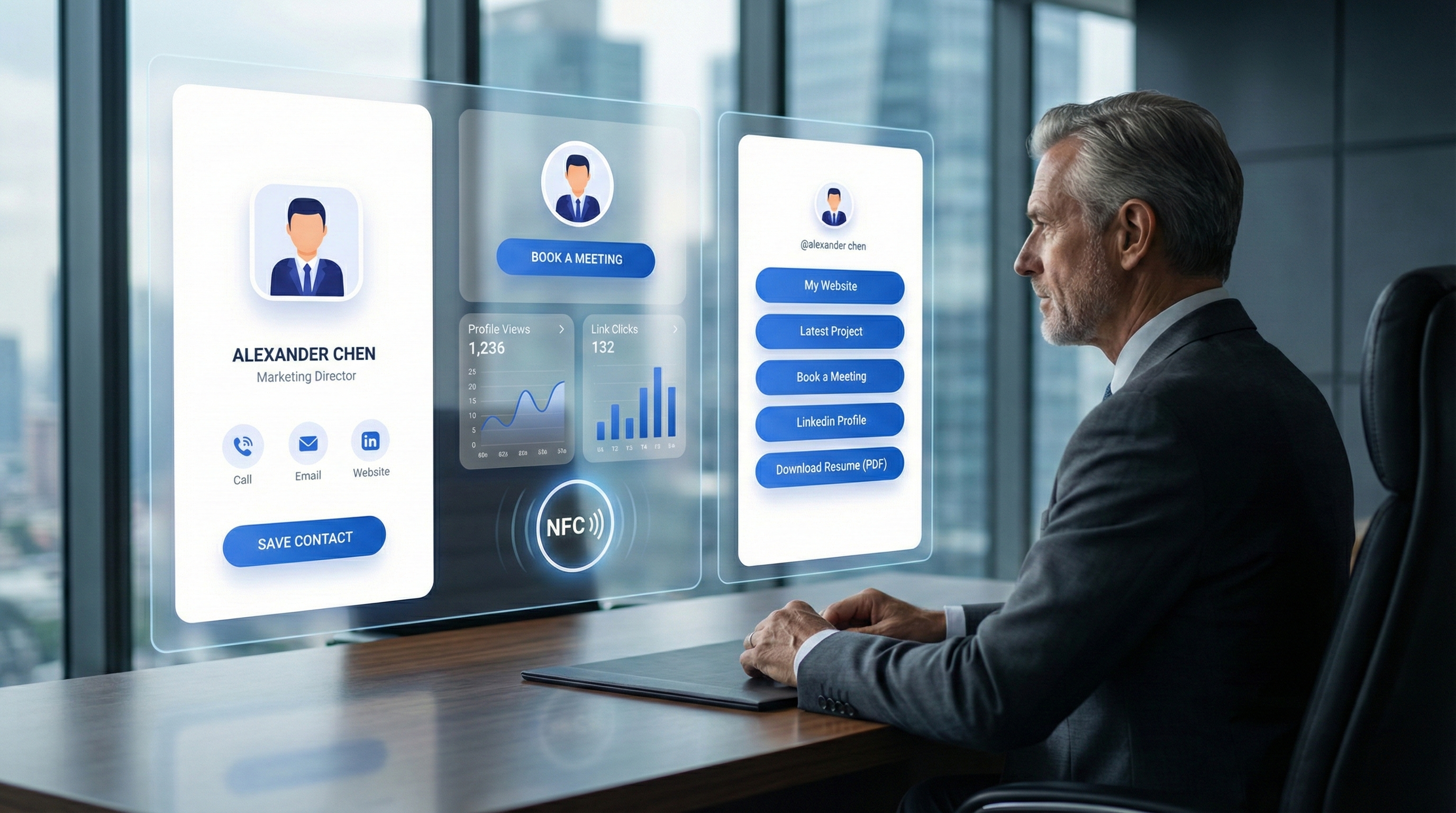
Unlike paper cards, digital cards are interactive, updateable, and trackable.
Modern platforms like ScaanMe go beyond simple contact sharing by combining:
-
Booking systems
-
WhatsApp store functionality
-
Analytics dashboards
-
Multi-language support
-
Event lead capture
The result is not just a card — but a smart networking system.
Side-by-Side Comparison
1. Environmental Impact
Paper Business Cards
-
Require paper production
-
Use ink and chemical processing
-
Often discarded within days
-
Reprinted frequently when information changes
Globally, billions of paper business cards are printed annually, and a significant percentage are thrown away within a week.
Digital Business Cards
-
No paper waste
-
No printing
-
No shipping
-
No disposal
From a sustainability perspective, digital cards clearly reduce environmental footprint.
Winner: Digital Business Card
2. Cost Analysis
Let’s break this down realistically.
Paper Business Card Costs
-
Design fees
-
Printing costs
-
Premium finishes (lamination, embossing)
-
Reprinting after updates
-
Shipping
If a professional prints 1,000 premium cards annually, the cost accumulates over time.
Every change in phone number or role requires another print run.
Digital Business Card Costs
-
Subscription fee (if advanced features required)
-
Optional NFC card (one-time cost)
There are no reprinting costs.
Updates are instant and free.
Over 3–5 years, digital business cards are significantly more cost-efficient.
Winner: Digital Business Card
3. Updating Ability
Paper Business Cards
If your:
-
Phone number changes
-
Job title changes
-
Company rebrands
-
Website updates
You must reprint everything.
Old cards become outdated immediately.
Digital Business Cards
You update your profile in seconds.
The same link works forever.
This is especially important for:
-
Sales professionals
-
Freelancers
-
Startup founders
-
Growing businesses
Winner: Digital Business Card
4. Scalability
Paper Business Cards
Limited by:
-
Quantity printed
-
Physical distribution
-
Geographic presence
You can only share paper cards in person.
Digital Business Cards
Unlimited scalability:
-
Share globally via link
-
Add to social media bio
-
Add to email signature
-
Use in virtual meetings
-
Share via WhatsApp
Digital cards work 24/7 worldwide.
Winner: Digital Business Card
5. Analytics & Tracking
This is where the real difference appears.
Paper Business Cards
You have zero visibility.
You do not know:
-
Who kept your card
-
Who contacted you
-
How many people viewed it
-
Which information was used
Digital Business Cards
Modern platforms provide analytics such as:
-
Profile views
-
QR scans
-
Click tracking
-
Booking conversions
-
Lead capture data
You can measure networking performance.
This transforms networking from guesswork into data-driven strategy.
Winner: Digital Business Card
6. Lead Generation & Conversion
Paper Business Cards
The process:
-
Exchange card
-
Recipient manually enters contact
-
May forget to follow up
Friction reduces conversion.
Digital Business Cards
The process:
-
Share link or tap NFC
-
Recipient saves contact instantly
-
Can book appointment immediately
-
Can message via WhatsApp directly
Less friction = higher conversion rate.
Winner: Digital Business Card
7. Professional Impression
This is subjective.
Paper Cards
-
Classic
-
Tangible
-
Traditional
Digital Cards
-
Modern
-
Tech-forward
-
Interactive
-
Memorable
At trade shows and exhibitions, contactless sharing creates stronger brand recall.
Many professionals now use both:
A premium NFC card connected to a digital business card profile.
When Paper Business Cards Still Make Sense
To be fair, paper cards may still be useful in:
-
Very traditional industries
-
Regions with limited internet access
-
Situations where digital sharing is restricted
However, even in these cases, most professionals now include a QR code on paper cards — bridging physical and digital.
Digital Business Card vs Paper Business Card: Summary Table
| Feature | Paper Business Card | Digital Business Card |
|---|---|---|
| Environmental Impact | High | Low |
| Reprinting Required | Yes | No |
| Global Sharing | No | Yes |
| Analytics | None | Yes |
| Booking Integration | No | Yes |
| Product Showcase | No | Yes |
| WhatsApp Integration | No | Yes |
| Updatable | No | Yes |
| Long-Term Cost | High | Lower |
The Hybrid Approach: Physical + Digital
The most powerful strategy in 2026 is combining:
-
NFC-enabled physical card
-
QR code backup
-
Smart digital profile
Companies like Popl helped popularize this concept, but the real advantage lies in the platform powering the digital profile.
ScaanMe integrates digital cards with:
-
Booking system
-
WhatsApp store
-
Event lead capture
-
Analytics tracking
-
Multi-language support
This transforms a simple card into a business operating tool.
Final Verdict
Paper business cards are not completely obsolete — but they are no longer enough.
Digital business cards offer:
-
Sustainability
-
Lower long-term cost
-
Unlimited scalability
-
Real analytics
-
Higher lead conversion
-
Instant updates
For professionals serious about growth, digital networking is no longer optional.
It is the new standard.