Digital Identity for Small Businesses in Egypt 2026


Digital identity for a small business in Egypt in 2026 comes down to four elements: a profile that answers who you are in one screen, products a customer can actually order, social proof that a stranger can trust, and contact with zero friction. A business that has all four, even a one-person workshop, looks established; a business missing any of them leaks sales silently. This guide expands each element with real Egyptian examples, from the spice trader in Khan El-Khalili to the furniture workshop in Damietta, and finishes with an honest free versus paid breakdown so you spend nothing until spending pays.
Why 2026 Makes This Mandatory
Two numbers explain the shift. Egypt counted 96.3 million internet users in January 2025, or 81.9 percent of the population, per DataReportal, so the customer who hears about you can and will look you up. And the competition is enormous: CAPMAS census data counts about 3.65 million micro, small, and medium enterprises in Egypt, with micro businesses making up 94 percent of them. When a customer compares two workshops he has never visited, the one that can be verified online wins by default. The verification moment, that thirty seconds of searching before messaging, is where Egyptian small businesses now win or lose the sale.
In Egypt's crowded small business market, the seller who can be verified in one screen wins the customer the other seller never knew existed.
Element 1: A Profile That Answers in One Screen
The customer's first questions are boring and decisive: what is this business called, what exactly does it sell, where is it, when is it open, and who is behind it. A digital business card answers all five with a name, a short plain-language description, a map link, working hours, and a real photo of the owner or the shop. The spice trader in Khan El-Khalili should name his specialty blends; the printing shop in El-Haram should say same-day banners; vagueness reads as amateurism. Write the profile in Arabic first, add English if tourists or companies are part of your market, and never let the description drift out of date.
Element 2: Products People Can Actually Order
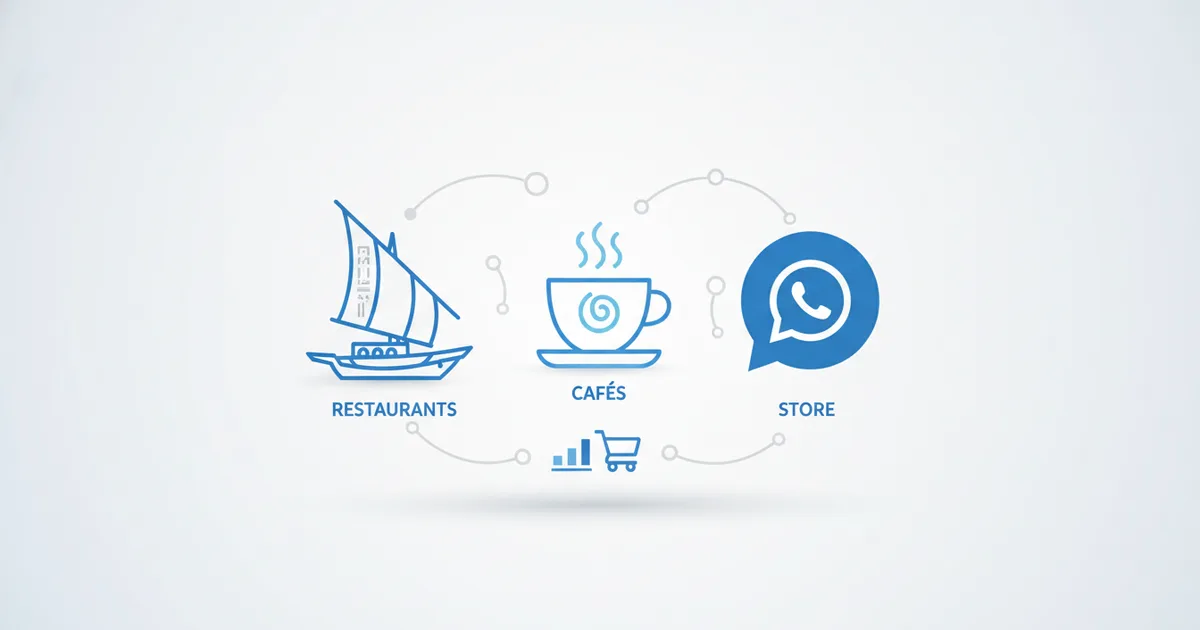
A description tells; a catalog sells. Even the free card lists your products with photos, prices, and an order button that opens a prefilled WhatsApp message to your number; the full WhatsApp Store, a browsable catalog with categories and structured orders, is the paid upgrade when you grow. The furniture maker in Damietta lists his ten standard pieces with dimensions and prices; the Mahalla textile seller lists fabrics by the meter; the home kitchen lists this week's menu. Photograph everything in daylight on a clean background. The difference between I sell ceramics and here are my ceramics with prices, tap to order, is the difference between a conversation and a sale.
Element 3: Social Proof That Compounds
Egyptians buy from people their circle vouches for, and a digital identity lets you widen that circle. Five genuine testimonials with first names, displayed on the profile, answer the stranger's real question: can I trust this person with my money? Add Google reviews if you have a physical location, and reply to every one. Never buy or invent reviews; Egyptian customers detect manufactured praise instantly, and one exposed fake costs more than fifty real ones earn. Ask for the testimonial in the week after delivery, when satisfaction is highest, and make it a habit rather than a campaign.
Element 4: Zero-Friction Contact
Every extra step between interest and conversation loses a percentage of buyers. The profile needs a WhatsApp button that opens a chat in one tap, a call button for the generation that prefers calling, and a booking link if you sell services by appointment. Put the profile QR code on your shop window, your packaging, and your delivery receipts. The customer who scanned your sticker at a wedding is a lead your competitor across the street will never see. Go one step further and let customers save your card as an Apple and Google Wallet pass: it stays one swipe from their lock screen, updates itself when your details change, and lets you send a single lock-screen note to every saved customer when a new batch, price, or offer lands, so a first order can turn into a habit.
Free vs Paid: What You Actually Need
Start free and stay free until the numbers say otherwise. A free plan is available and covers the four elements above: profile, product showcase, testimonials, and contact buttons. Paid plans start from $7.99 per month and add analytics, booking, and deeper store features; the pricing page has the full comparison. The honest upgrade test: when knowing which products get opened most, or taking bookings automatically, would recover one sale a month, the subscription pays for itself. Until then, the free tier is genuinely enough, and if you are starting from absolute zero, our step-by-step plan for starting an online business in Egypt for free walks the launch week in detail.
From Khan El-Khalili to Aswan
This model fits the full map: clothing wholesalers in Wekalet El-Balah, galleries in Zamalek, fish traders in El-Anfushi, furniture makers in Damietta, textile exporters in Mahalla, alabaster workshops in Asyut, and tourism services in Aswan. None of them need a developer. All of them can create a free account at Scaanme and have the four elements live before tomorrow's first customer searches for them.
FAQ
What is the first thing I should do to have a digital presence?
Build the one-screen profile: name, plain description, photo, hours, and a WhatsApp button. That single page removes the emptiness that kills trust, and everything else builds on it.
Is a Facebook page enough for a small business in Egypt?
It helps but it is not enough on its own: pages bury products in a feed, look inactive within weeks of the last post, and depend on an algorithm. Use Facebook for reach and a structured profile with a product catalog and order buttons as the destination you send people to.
Do I need technical skills?
No. If you can post a photo in a WhatsApp group, you can build the profile and the product list from your phone in an evening.
How much does a digital identity cost for a small business in Egypt?
A free plan is available and covers the profile, products, testimonials, and contact buttons. Paid plans start from $7.99 per month for analytics and booking. Details are on the pricing page.