Faculty and member profiles: what a digital card proves


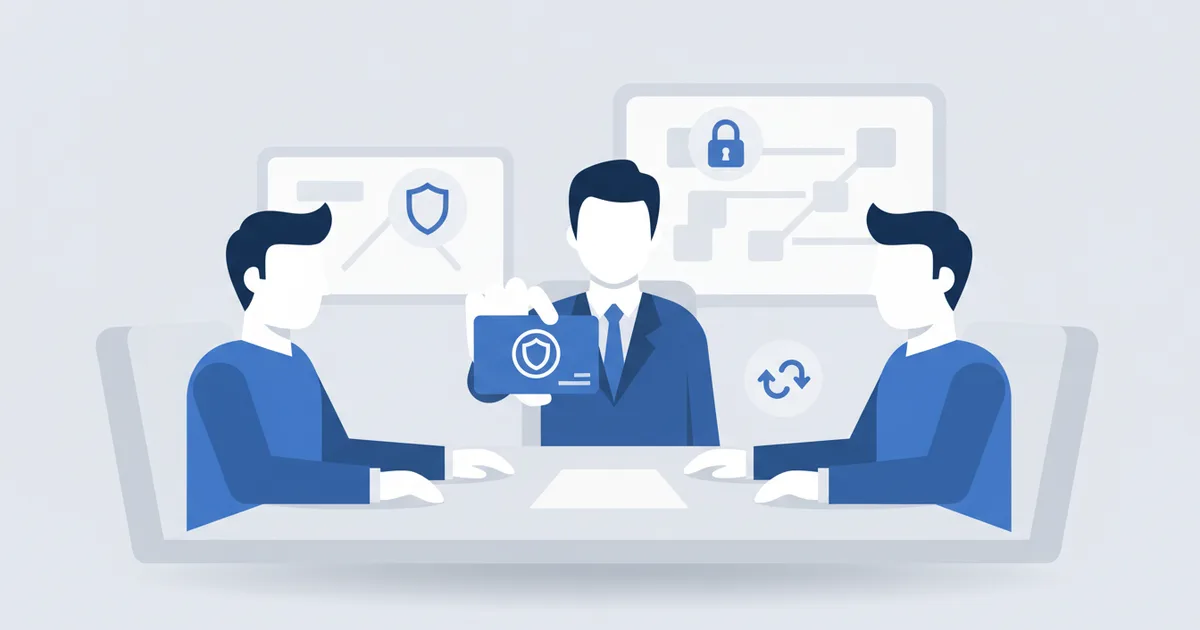
Scaanme can give a lecturer, researcher, trainer or association member a public digital profile with contact details and links. That suits introductions, conference networking and access to published work. A public profile or saved wallet pass does not by itself prove current employment, active membership, a professional licence or permission to enter a building.
A university or chamber can use the public page to help visitors find a member's contact details and work in Arabic or English. If a gatekeeper must verify a live entitlement, you need a verification process and an authoritative record behind it, not only an attractive card.
Choose the right type of record
| Need | Suitable starting point |
|---|---|
| Introduce a faculty member | Public profile with approved institutional details |
| Show research work | Links to publications and the researcher's established identifiers |
| Introduce a trainer | Profile with relevant program information and contact route |
| Confirm active membership | A current association record and a defined verification process |
| Control campus entry | An access-control system evaluated for that purpose |
| Prove a qualification | Evidence from the authorized awarding or licensing body |
List the information the institution approves for publication, then name the official system used to verify employment, membership or access rights.
Build a faculty page around the next action
A prospective collaborator usually needs the person's department, area of work and a reliable way to contact them. A student may need office-hour information or a link to the official course page. Keep those actions visible before a long biography.
For research, link to the correct ORCID record when the person has one. ORCID provides a persistent researcher identifier; a link on a Scaanme profile helps a reader reach that existing record. It is not a claim that Scaanme issues or verifies the identifier.
Use institutional contact details approved for publication. Avoid publishing private student records, internal staff identifiers or personal numbers simply because a form contains space for them. If several people share the same name, an accurate department and official profile link help the visitor identify the right person.
Keep Arabic and English records aligned
Agree on the Arabic name, English spelling and job title before importing or entering details. A department might approve an English title that is broader than its Arabic equivalent; that discrepancy should be resolved by the institution rather than improvised during page setup.
Use the same source record to check both versions. Open the phone link, email link and publication links from the actual page. Review long names and mixed punctuation on a narrow phone screen, where a layout that looked fine on a desktop may become harder to read.
The W3C's bidirectional-text guidance explains the mixed-direction issue. Your acceptance test is simpler: have an Arabic reader and an English reader perform the same task and compare whether they reach the same destination.
Design what happens when status changes
An association member may stop renewing. A visiting lecturer may finish a contract. A student may graduate but still need a personal networking page. Decide what changes, who authorizes it and whether the profile should remain public in a different form.
Scaanme's team administration can deactivate a public card. That is useful for publication control, but it should not be presented as an automatic connection to the institution's membership or student system. Establish the actual update process, and test an old link after a status change.
A screenshot of a card can outlive the card's current status. So can a downloaded contact. If someone must prove entitlement today, direct the verifier to a current authoritative record rather than accepting the appearance of a saved image.
When a verified credential is the requirement
The W3C Verifiable Credentials standard describes a different kind of data model involving issuers, holders and verifiers. A regular profile page is not automatically an implementation of that standard.
For membership verification, ask the supplier to show how an issuer establishes a claim, how a verifier checks it and how an expired or revoked claim behaves. Do not label a Scaanme profile as a cryptographically verified credential unless that capability has been separately demonstrated and agreed.
Run a small institutional pilot
Choose sample records covering a long faculty name, a visiting researcher, a trainer and a member whose status will expire. Have the institution approve the published information, then rehearse correction and removal as well as initial creation.
Use the team administration checklist for ownership and the institutional buying guide for the purchasing file. Before expanding the pilot, assign responsibility for correcting profiles and removing outdated affiliations.
FAQ
Can Scaanme replace a university access card? A public profile is not a campus access-control system. Assess entry permissions and identity verification as separate requirements.
Can a researcher link publications and ORCID? A public profile can contain links to established records. Check every link and avoid implying that linking a record verifies its contents.
Can an association show member information? It can publish approved profile information. Live membership verification needs its own authoritative record and update process.
What should happen after graduation or contract expiry? The institution should define whether it removes, changes or transfers the public profile, subject to the service's actual capabilities and the person's agreement.