QR menus for restaurants and cafes in Saudi Arabia

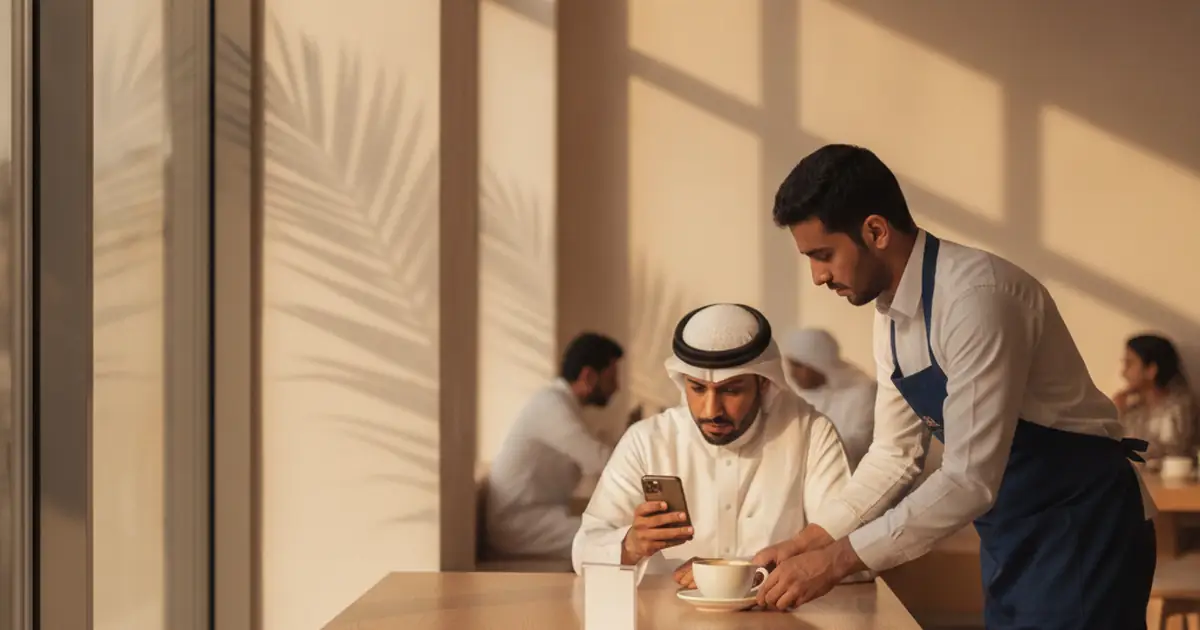
A printed menu in Riyadh or Jeddah goes out of date the moment a supplier raises a price or the kitchen runs out of a dish. Reprinting takes days and costs money every round, so a price can sit wrong for weeks while the server explains it at the table. A QR menu closes that gap: your menu is a web page you edit from your phone, and every code already on your tables points at the current version.
The code stays the same, the menu changes
Owners usually assume a new price means a new code. It does not. The code on your table tent is a pointer to a link, and the page behind that link is yours to edit. Change a price at 11am and the guest who scans at 11:01 reads the new one. That is what a dynamic QR code does, and it is why a QR menu absorbs supplier changes without a trip to the printer.
| Task | Printed menu | QR menu |
|---|---|---|
| Raising the price of one dish | Reprint the page or sticker over it | Edit on your phone, live on every table |
| A dish the kitchen has run out of | Tell every server and hope they remember | Toggle it off and guests stop seeing it |
| A Ramadan iftar section | A separate design and print run | Switch it on, switch it off after Eid |
The sold-out toggle is the part owners notice first: a guest who orders a dish that has run out has to choose again, and the table takes longer to turn.
One code per table, and what the scans tell you
You can start with the same code repeated on every table tent, which is fine for the first week. Splitting the codes by table or by section is worth doing after that. Scan counts show which part of the room fills first, which helps when you decide where the extra server goes on a Thursday night. And if you take orders through WhatsApp, a code tied to a table carries the table number into the message, so the kitchen knows where the order goes.
Print templates for table tents, sticker sheets, and A5 stands are ready for any print shop in Riyadh, Jeddah, Dammam, or Khobar. The stand is the only thing you reprint, and only if it gets damaged.
Some dining rooms already have NFC tags in those stands from an earlier supplier. A tag holds the same link and opens the menu on a tap, and the NFC Forum documents how that short-range read works. Scaanme does not sell or ship tags: if you own them already, you point them at your menu link from your account at no charge.
Arabic and English without printing two menus
A Saudi dining room seats a local family and a Filipino engineer in the same hour. Printing a laminated menu for each language is impractical, so the usual compromise is two languages squeezed onto one page in type small enough to be hard to read.
A digital menu handles it differently. The guest opens the menu and picks a language: Arabic rendering properly right to left, English at the same quality, and other languages ready for the rest of the room. Dish names that do not translate cleanly, مندي or كبسة for example, stay as they are with a short description underneath.
Guests reach all of that on their own phones, and connectivity and social platform use in the country is tracked each year in DataReportal's Digital 2026 report for Saudi Arabia. Our guide to a QR menu in Amman covers the same bilingual setup for a Levantine kitchen.
Calorie labels are easier to keep straight digitally
Calorie labelling on Saudi menus follows rules the SFDA publishes, so check the current version for your category before anything goes to print. On paper the maintenance problem is always the same: change a recipe, a portion size, or a supplier, and the number is wrong the day it comes back from the printer.
On a digital menu each item carries its own calorie count and its own dietary labels, halal, vegetarian, vegan, gluten-free, dairy-free, spice level, and you edit one item without touching the rest. Guests who need that information find it without asking, and you are not reprinting a hundred menus because the rice portion changed. The Saudi QR menu setup keeps those labels on the dish itself.
Taking WhatsApp orders alongside the dine-in room
The same menu link works outside the building. Put it in your Instagram bio, on the takeaway bag, and in a WhatsApp message, and someone browsing at home sees what the guest at table nine sees. Their order arrives as a message in your inbox with the items listed.
This is where a WhatsApp store in Saudi Arabia sits next to the dine-in menu: delivery apps bring new customers, and your regulars order direct to your own number, with Scaanme taking no cut. Our post on WhatsApp stores for Saudi restaurants goes deeper into that trade-off.
Getting your menu onto the tables this week
Setup is short. Build your categories, import your current menu from a PDF or a spreadsheet, photograph your best dishes, set your riyal prices, and add calorie and dietary labels. Download the code, send the table tents to print, and the room is running the same week.
If you run a second branch, you copy the menu and change what differs instead of starting over. There is a free plan, so you can build the whole menu and open it on a phone before you decide. If you also want a contact page for suppliers and food expos, a digital business card runs from the same account.
Frequently Asked Questions
Do guests need to download an app to see the menu? No. Scanning the code with the ordinary phone camera opens the menu in the browser, like any link. There is nothing to install and no account to create, for the guest or for your staff.
If I change a price, do I have to reprint the QR codes? No. The printed code points at a link, and the menu behind the link is what you edit. Change a price or hide a dish that has run out, and every table sees the new version on the next scan.
Can the menu show calories and dietary labels for each dish? Yes. Every item carries its own calorie count and labels such as halal, vegetarian, vegan, and gluten-free. Editing one dish leaves the rest of the menu alone, which matters when a recipe changes mid-service.
Can I take orders from the same menu link? Yes. The menu link can carry a WhatsApp order button, so a guest at the table or a customer at home sends their order as a message to your number. You confirm it and agree the payment in the same chat.
Does this work for a small cafe with ten items? Yes, and it is faster than a large menu. A specialty coffee shop in Khobar with a drinks list and four pastries can have its menu ready the same day on the free plan.