QR menus for restaurants and cafes in Kuwait

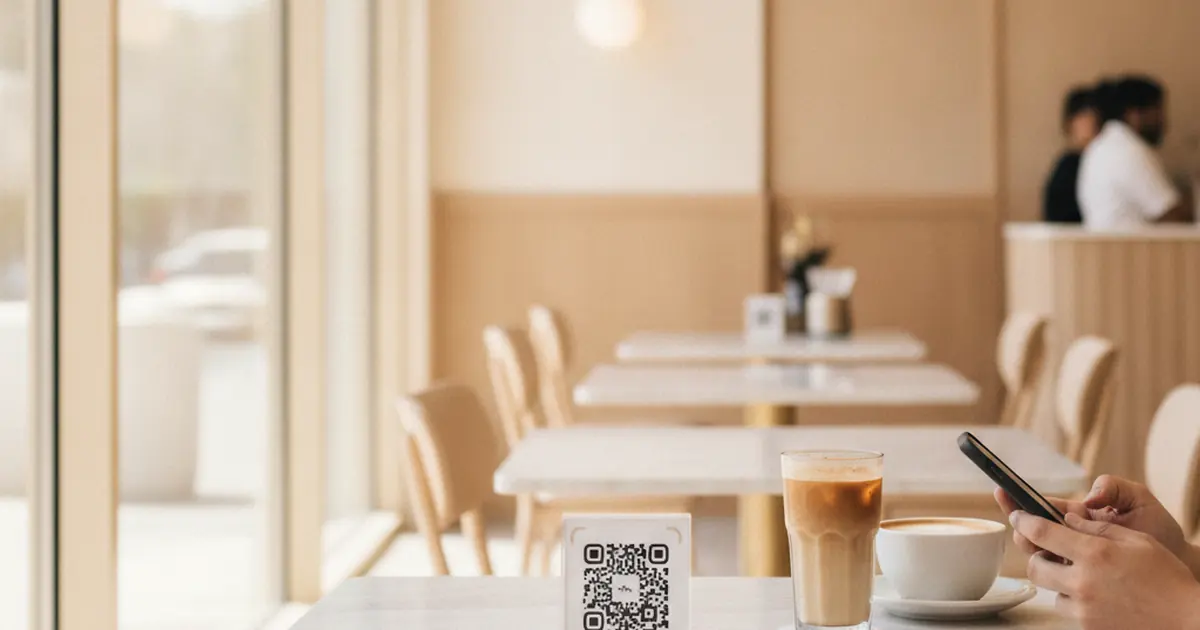
A restaurant in Salmiya changes its menu far more often than it reprints it. An imported ingredient gets more expensive, a dish sells out on a Thursday night, and the printed menu in the guest's hand is already out of date. A QR menu closes that gap, and in Kuwait it has a second job: the menu on your tables also carries the delivery orders that arrive on WhatsApp.
One menu, two rooms
Plenty of restaurants and cafes in Kuwait City, Salmiya and Hawally are running two menus without calling it that. The first is printed for the tables. The second is a folder of photos or a PDF that someone on staff forwards on WhatsApp when a customer asks what is available today. The two drift apart within weeks, and the delivery version is usually the older one.
A QR menu makes them the same thing. You edit a price or an item once, from your phone, and the change is live on the table code and on the link you send in chat at the same moment. The QR menu for Kuwait page walks through the setup in Arabic and English.
What a guest does with the code
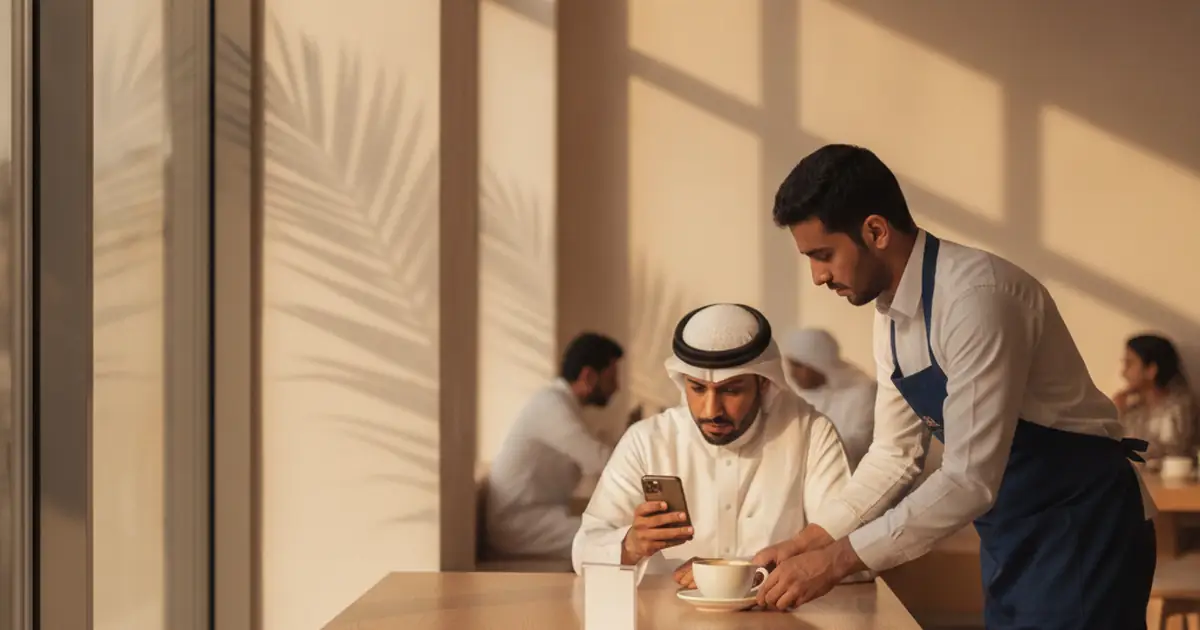
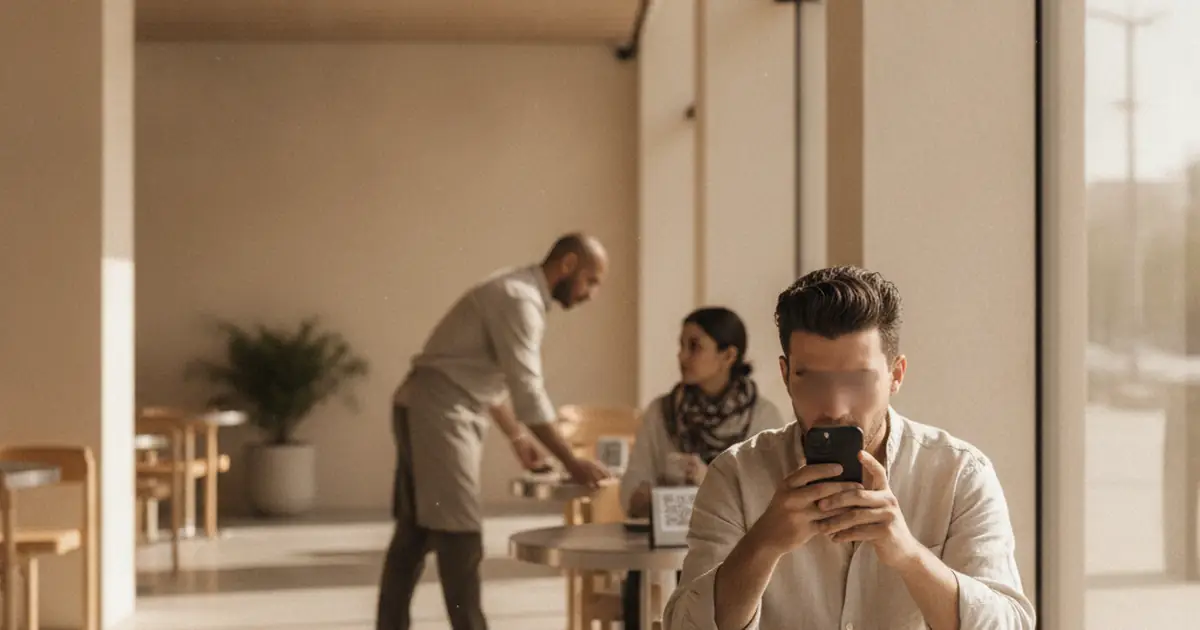
The guest points a camera at the sticker on the table and the menu opens in the browser. No app to download and no account to create. It matters, because a guest who has to install something will ask the waiter instead.
Behind the sticker is a dynamic QR code, so the code itself does not change when the menu does. You print once, and edits land on the content behind the code, which means a sticker you laminated in January still works in December after four menu revisions.
Seasonal changes without a print run
Kuwait's food calendar changes several times a year, and each change leaves the printed menu wrong until it is reprinted. Ramadan brings iftar sets and ghabga service for a few weeks. February fills up with National Day and Liberation Day. Summer pushes everyone indoors, and the cooler months reopen the outdoor seating.
Every one of those turns is a menu change. On print that is either a reprint cost or a pen mark in front of the guest. On a QR menu you hide the ghabga section on the last night of Ramadan and it is gone, and when the kitchen runs out of something at nine in the evening you mark it sold out for the tables and for delivery in one edit.
| Menu change | Printed menu | QR menu |
|---|---|---|
| Price change on one dish | reprint, or pen mark | edit once, no reprint |
| Item sold out tonight | tell every table | mark sold out once |
| Ramadan or Eid section | separate print run | show and hide by date |
| Arabic and English | two printed versions | one link, the guest picks |
Arabic and English on the same link
A dining room in Kuwait holds Kuwaiti families and Arabic-speaking residents at one table and guests who read English rather than Arabic at the next. Printing for both means two stacks of menus, or one crowded page where the Arabic type shrinks to fit.
A digital menu hands every guest the same link and lets the phone show it in Arabic right to left or in English, with the same prices underneath. Adding a dish adds it in both languages in one edit. It helps the floor team too, since the waiter opens the same link and sees what the guest sees.
Where WhatsApp already does the ordering
Ordering food in a chat is ordinary behaviour in Kuwait. Customers message the restaurant to ask what is on today, then send the address as a pinned location. What breaks is the middle part, where the menu arrives as photos and the order arrives as a paragraph the kitchen has to decode. For the wider picture, DataReportal's Digital 2026: Kuwait report tracks mobile, internet and social media adoption in Kuwait.
A WhatsApp store runs on the same catalogue as your table menu. The customer browses, taps the items, and a prefilled order message opens addressed to your number, itemised with quantities. You confirm and arrange delivery in the same chat. Two guides go deeper: selling on WhatsApp in Kuwait covers the ordering and payment mechanics, and digital menu against WhatsApp store for Gulf restaurants helps you pick which one you need first.
A tap tag beside the code
Some venues put a small NFC tag next to the code, so a guest can tap instead of framing a camera, and it opens the same menu. The tap standard behind that is documented by the NFC Forum. Scaanme does not sell or ship tags. If you already own one, you can point it at your menu from the dashboard at no cost, and the printed code stays on the table.
Home kitchens and single-branch cafes
Plenty of food businesses in Kuwait run without a dining room at all. They work out of a home kitchen with an Instagram account and a delivery driver. The problem is the same one: dishes live as photos scattered across posts and stories, and the price in a September post is out of date by now. One catalogue link in the bio replaces all of it, and a QR on the packaging lets a customer reorder without scrolling back through your grid.
Scaanme has a free plan, so a home kitchen can publish a full menu before spending anything. If you take pre-orders for trays or work in fixed pickup slots, the booking system holds the times and stops you taking more orders than the kitchen can cook.
Frequently Asked Questions
Do guests need an app to open the menu? No. The camera reads the code and the menu opens in the phone's browser, on iPhone and Android alike. Nothing gets installed and no account is created.
Can one menu cover dine-in and delivery? Yes, and in Kuwait that is the main reason to set one up. The table code and the link you send in a WhatsApp chat point at the same catalogue, so a price you change for delivery is already changed for the tables.
What happens to my printed QR stickers when the menu changes? Nothing. The code points at your menu rather than containing it, so you can rewrite every price and the sticker keeps working. You reprint only when the stickers wear out.
Can the menu be in Arabic and English at the same time? Yes. One link carries both, the phone opens the language it is set to, and the guest can switch. Arabic renders right to left properly.
Is there a free way to try this for a small cafe? Yes. The free plan is enough to publish a menu and print a code, and you can read what a QR menu is before you build anything.